
The DGT is implanting HOV-Bus lanes reserved for specific vehicles: buses and those considered High Occupancy Vehicles (HOV), meaning those carrying two or more people.
This type of lane is designed as “an efficient and sustainable alternative to some of the major mobility problems,” the DGT stated.
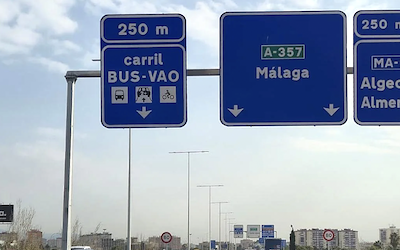
Its main goal is to streamline the movement of traffic by prioritising the use of car-pooling and public transport.
Furthermore, the use of HOV-Bus lanes reduces the number of vehicles on the road, improves air quality and traffic flow, as well as reducing traffic congestion and wait times.
A topical point is that transporting people by bus instead of private cars reduces fuel consumption – thanks, Trump!
We did an article a week ago about how the Director of the DGT, Pere Navarro warned, “in the future, traffic will be shared or it won’t exist at all.”
These are the HOV lanes confirmed by the DGT in Spain, including one in Granada, all of which will be active throughout 2026
Granada (GR-3211): The right lanes in both directions between Granada (A-395) and La Zubia.
The other cities where these cameras are installed are: Madrid, Sevilla, Málaga, Palma, Madrid and Valencia.
News: City & Metropolitan Area, Granada, Andalucia)
Keywords: Lane Control Cameras, DGT, High Occupancy Vehicles, HOV, Sevilla, Málaga, Palma, Madrid and Valencia.
news, andalucia, granada, city & metropolitan area, lane control cameras, dgt, high occupancy vehicles, hov, sevilla, málaga, palma, madrid and valencia.