
The beach-hopping jellyfish invasion from the Land of Giants has started; abandon your sandcastle, retreat! Yes, the bloated blighters have arrived in Salobreña.
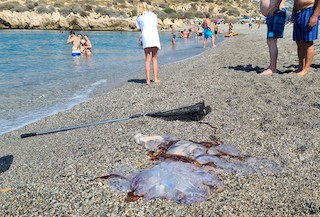 You might have already noticed them on the Playa El Charco or Playa de la Guardia, or even in supermarkets, barging in queues at the checkouts singing “Roll out the Barrel” or making sarcastic comments next to the jellybaby shelf. They’re everywhere.
Actually, they’re not, but why let reality ruin a good alarmist rant? Ask Donald Trump. Anyway, it’s hot but I’ll try to concentrate…
The good thing about these jumbo-size, translucent foragers is that they don’t sting – they might swallow you whole, but they don’t sting.
Some of them weigh up to seven kilos, according to the Lifeguard report – they have been busy removing them from the sand… and supermarkets.
News: Salobrena, Costa Tropical, Granada, Andalucia – Photo: Radiosalobrena)
Paul: people don’t know whether they sting or not; they don’t try to touch them to find out.
It’s likes snakes; you don’t assume that they are not venomous – you assume they are. When jellyfish come that close to the water’s edge, waves wash them up onto the sand. At 7kg, you certainly can’t land them with a kiddies net bought at the local Chinese bazaar.
Here’s a quote from The Wildlife Trusts:
“These large jellyfish swarm in warmer coastal waters in late spring and often wash up on our beaches in May or June, sometimes in their hundreds. Their favourite meal is plankton, which can be found in shallow waters. This is what often causes them to wash up, as they underestimate their size. They have eight frilly arms, which contain their small stinging tentacles and surround hundreds of little mouths! The sting of the barrel jellyfish is not normally harmful to humans, though if you find one on the beach it’s best not to handle it as they can still sting when dead.”
What the Town Hall is doing is retrieving the ones that are washed up on the beach, just as they would any dead marine life so your concern that they will set sail to hunt down dolphins so they won’t be mistaken as shark is… highly improbable. 😉
I am assuming they are already dead when on the beach ?
It is terrible that the council think it is OK to kill them when they are harmless. Can they not just put up signs telling everyone not to worry as they do not sting. What next? killing dolphins in case people get worried because they may be mistaken for sharks?