
Here are two items of news that show the opposite ends of honesty and dishonesty; one is a wallet handed in intact and the other is a person stealing from the elderly.
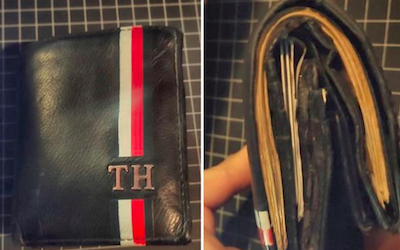 We recently published an article about a man who had lost his wallet in Granada and was suprised when somebody found it and handed it in, with 420 euros in cash within it.
Now, the same has happened again but the cash content was 1,600 euros in it.
Pedro Jesús was the name of the honest citizen who found the wallet and decided to do the correct thing and hand it in to a police station so that it could be returned to its rightful owner.
It was around 19.30h Saturday evening that 50-year-old Pedro from Huelva walked into the municipal police station in the city of Granada. He had found the wallet with all the owners bankcards, his ID card, driving licence – the lot – plus 1,600 euros in cash.
The owner, Gustavo, was not an easy person to track down as he is a resident of Murcia. However, in the wallet was a parking ticket for an underground car park in the city and when the police contacted the garage staff, the car that it corresponded to was still parked there.
So, the police asked the staff to inform the car owner to contact them because they had his wallet. And that is what Gustavo did – probably the happiest man on the planet at that moment.

The police remind citizens that if you do find a wallet and hang onto it, you can be prosecuted and fined the quantity of which varies depending on the amount of cash that it held.
All this brings us to the other side of the coin and deals with a woman who carries out a home-help service for elderly people,
The Policía Nacional in Granada have arrested a 37-year-old woman, accused of stealing jewellery worth 22,200 euros, as well as 140 euros in cash from the homes of two of her clients. The accused works for a company that provides helpers for this purpose – helping out, that is, not ‘helping themselves.’
It was owing to complaints received from the families of the victim that the Policía opened an investigation into the thefts. The suspicions soon fell on the home-help, who does not have a criminal record.
The police discovered that the woman had made 25 sales at different establishments specialised in buying and selling jewellery, five of which are related to the missing valuables from the home of one of the two victims. The police are investigating the other 20 operations to track down other possible victims.
The victim, in this case, is a woman in her 90s and the value of the items recovered amount to 2.200 euros. Such establishments are obligated to hang on to items that they purchase for a period to time, but once that time elapses, they can legally sell them on, which has been the fate of her other valuables, it seems.
The accused came to work for the victim because the helper who originally did it had left the company so she was called in to substituted her.
At first the suspect denied having stolen anything when confronted by the family, but later admitted that she had done it out of desperation because of her financial situation. For this reason the family decided to give her time to recover what she had stolen and to return it. This she never did, so they reported her to the police.
It was whilst investigating this first case that they discovered the second one, where the suspect had also worked. In this case the value of the stolen items was much higher, 20,000 euros. Again family members had realised what had happened and had reported the theft. The missing jewels had been kept in a jewellery box whose key was always left in the lock.
In other words, there had been two different denuncias made before the police but it was afterwards that that police realised that the same person was probably behind both of them.
Unfortunately, these kinds of theft are reported some time after the valuables are removed because relatives only discover the them months or even years after the fact.
(News: City & Metropolitan Area, Granada, Andalucia)