
Standing at the zinc bar at my humble, favourite, morning-coffee, brewer’s place in Costa Granada, I do my best to have a conversation with my fellow coffee drinkers.
 Not just to be nice; it’s because I want to. But it’s sometimes a mammoth task, because my fellow coffee drinkers are very local, very Andalusian. When they open their mouths, it seems like only vocals are coming out, governed only by their tongues and me wondering if they have teeth in their mouths at all?
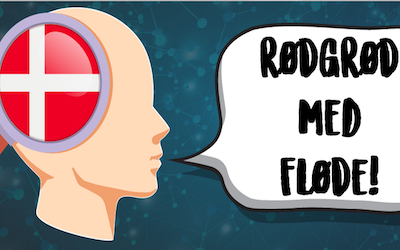
Well, that’s how people around the world see the Danish language. It’s impossible to learn, it’s esoteric, the words change meaning on a platter, and, as if all we Danes were standing at a morning coffee bar talking – which we’re not, because sadly we take our coffee at home – it’s all one big mouthful of vocals coming out. Sound and Fury meaning nothing.
Vocalisation becomes extreme, when we – well, some of us – say “A æ u å æ ø i æ å” Meaning I’m out on the island in the brook.
Tell you one thing, though: Danish is easy. Everything is easy when you know how.
I will give you, though, Danish has it’s tough, tight corners. Even the Danes aren’t too good at speaking the language, let alone putting it into writing. Even people who use the language for their living; journalists, actors, editors, translators, communicators, have their problems. Limping along with the language on crutches, thinking they’re doing great and grand. Which they’re not. Well, let us let them stew in their own pot of liver & kidney and all of my other hate-dishes.
When these well paid people can’t handle the Danish language, how should we expect our young to master the ever-changing, vocalistic mouthfuls meaning nothing or everything? Research tells us, that it takes Danish kids about two years longer to learn the past tense of the verbs than it takes our Norwegian neighbours in their own language.
Well, maybe Norwegian isn’t such a refined language as Danish.
Or maybe we have just been mumbling since Prince Hamlet on Kronborg. We made an art out of mumbling. Think of Mads Mikkelsen and other of our renowned actors. Nobody understands them. Not even the Danes. And we don’t have subtitles, so we understand less than the English, German, Dutch. We watch the movies as silent movies. Good for imaginative exercises.
Among the coffee drinkers at the zinc bar in the mornings is sometimes my barber and friend Raymundo. We are running sort of a language school among us. He tries to teach me to say “Anda polla anda” with the correct Andalusian drawl, I teach him Danish words as “Fodgængerovergang,” “Op i æ hunds røv,” “daggamle skægstubbe” and the like.
As there now seems to be Danish, political consensus, as a result of the Ukraine crisis, to let American soldiers deploy on Danish soil, I find it only fair, if the US-soldiers learn Danish perfectly – or at least matching the Danish journalists, writers, translators, actors etcetera – so they can say things like “Vi har intet torturkammer i Danmark,” “Her er ingen A-våben på basen” or “Jeg ville bare kysse”.
Anyway, may your God be with you and your language. Maybe you need it. As does your language and your God. We all do.
Language is a strange thing. Why does Spanish, German, French etc try to assign gender to words, often it seems quite randomly? One day the PC gender police will catch up with them. The idea in English of assigning ‘they’ and normally plural words to people who prefer not to identify as a particular sex, will be nothing compared to this storm.
Language is so important, not just as a means to communicate but it also is as store of our ‘cultural DNA’.