
Every year the Costa Tropical gets unwanted visitors… and I’m not talking about people from Granada and Madrid, but rather jellyfish!
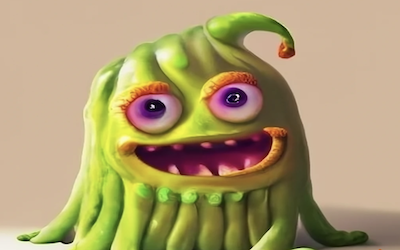
Turns out that this summer the probabilities of having swarms of boisterous, glutinous thugs sneaking up on bathers is low. How do we know? Well, this sneak preview comes from tool called Oceanaria, which was created by the Junta in collaboration with universities.
It uses AI which calculates the mathematical probability of the presence of jellyfish swarms.
Francisco Ignacio Franco, who is the boffin in charge of the Ciencias del Litoral de la Universidad de Málaga, explains that the arrival of these blighters depends on the movements in the water off the Alboran islets.
Apparently, the current entering through the Strait of Gibraltar doesn’t take a straight course but makes two turns: one off the coast of Motril and another off the Costa del Sol. If these watery, handbrake turns are now operating, as is currently the case, the jellyfish remain in the open sea, making them harder to find off our beaches.
Now, there are many kinds of jellyfish but the ones that really like to hang out with their pals in the shallow water of a beach loaded with Granadinos are Pelagia noctiluca, which like to lurk about 200 metres down during the day but go skinny dipping at night, frolicking in the surf.
Other dangerous species include Olindias phosphorica, Rhizostoma pulmo, or Carybdea marsupialis, better known as the No Good, the Bad and the downright Ugly, but these tend to feed and make whoopee in the open sea, far away from beaches.
Now, there is another phenomenon, which is sea foam, or as the Spanish call it, nata (cream). Our salty boffin explains that, “they are an aggregate of particles that absorbs everything in its path, such as marine microalgae.”
Funnily enough, its existence depends exclusively on the type of waves. Granada has an orientation toward the east (levante). When there are waves, the water penetrates the sand and creates what people call natas. Therefore, the probability of finding it on the beaches of the Costa Tropical is higher; around 60% on beaches like Almuñécar or Torrenueva.
So waves coming from the east, which thet predominatly do, are stronger and whip up more sea foam whilst the ones coming from the west tend to be a bit limp wristed.
This sea foam, also known as ‘yuk’ amongst English-speaking bathers, is generated the most by artificially regenerate beaches, because being river silt, it has a higher clay-mineral content.
Interesting, eh?
(News: Costa Tropical, Granada, Andalucia)
Kewords: Jellyfish Probabilities, University of Malaga, Sea Foam, Nata, Mathematical AI Model
news, andalucia, granada, costa tropical, jellyfish probabilities, university of malaga, sea foam, nata, mathematical ai model