
Physical activity is more than exercise; it's an investment in clarity, resilience, and future wellbeing. Quiet work, done over time. Not dramatic, but deeply sustaining.
Exercise as Care for the Mind
Most of my patients already know the familiar reasons to stay active. We talk about protecting the heart, strengthening bones, and maintaining a comfortable weight. These are important goals: practical, visible, measurable. But alongside them, something quieter is happening. A less obvious story, unfolding in the brain.
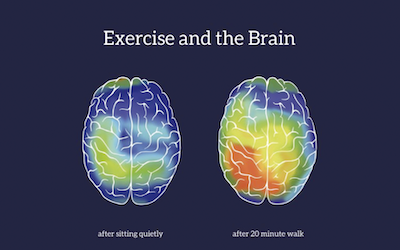
Movement, it turns out, is not just maintenance. It is nourishment.
It can be helpful to shift how we think about exercise. Rather than a task to complete or a box to tick, it can be seen as a form of care. Something closer to treatment than obligation. In clinical practice, this perspective is gaining ground. Physical activity is increasingly recognised as a therapeutic tool, one that supports the mind as much as the body. Regular movement has been shown to lift mood, sharpen thinking, and reduce the risk of cognitive decline. Not dramatically, perhaps, but steadily, reliably.
At the centre of this is the brain’s capacity to adapt. For many years, we assumed that ageing meant inevitable decline – a slow fading of sharpness and flexibility. That view has shifted. The brain is far more responsive than we once believed. With consistent aerobic activity, it can actually grow. Key regions increase in volume; grey matter becomes more robust, and white matter – those vital connections between regions – strengthens. The brain is not simply preserved. It is actively supported.
One structure in particular, the hippocampus, responds strikingly well. This is the part of the brain deeply involved in memory. Over time, it naturally tends to shrink, but exercise appears to slow, halt, and in some cases even reverse that process. At the same time, communication between the hippocampus and the prefrontal cortex improves. This connection underpins focus, planning, and decision-making – the quiet cognitive skills that shape how we navigate each day.
These changes are not abstract. They show up in small, human ways: recalling a name without effort, following a conversation with ease, holding attention just a little longer. Subtle shifts, but meaningful ones.
Beneath this, there is a biological story unfolding. Physical activity stimulates the production of compounds such as Brain-Derived Neurotrophic Factor (BDNF) and Insulin-like Growth Factor (IGF). These support the growth, repair, and resilience of brain cells. If we imagine the brain as a landscape, these are part of what keeps it fertile and responsive. More intense activity tends to amplify these effects, but even moderate, consistent movement is enough to make a difference.
Strength training adds another layer. Often associated purely with physical capability, it is now increasingly linked to cognitive health. Gains in muscle strength frequently accompany improvements in memory and executive function, particularly in later life. Perhaps more importantly, some of these benefits appear to persist, offering a sense of continuity beyond the training itself.
For those living in the Axarquía, the conditions for this kind of care are already in place. The current guidance – around 150 minutes of moderate aerobic activity per week, alongside a couple of strength sessions – is less demanding than it might sound. A brisk walk, time outdoors, simple resistance exercises at home – these are enough to begin.
What matters most is not intensity, but rhythm.
There is value in approaching movement with a certain gentleness. Effort has its place – the brain does respond to challenge – but strain is not the goal. Consistency is. A pattern the body recognises, and the mind can depend on.