
There are regions defined by a grape, and grapes that quietly reshape a region.
D.O. Rueda 100% Sauvignon Blanc
Rueda belongs, unmistakably, to Verdejo; a variety that has come to define its identity: fennel, bitter almond, herbal edge, a certain rustic honesty wrapped in freshness. Yet alongside it, almost as a counterpoint, Sauvignon Blanc has found a second home here; not native, not traditional, but increasingly convincing. This is where Mocén situates itself.
Rueda lies on the high plateau of Castilla y León, between 600 and 800 metres above sea level. The landscape is austere and open; wide skies, poor gravelly soils rich in limestone, and a climate that swings hard between extremes. Summers are hot and dry, winters cold and long, rainfall scarce, rarely exceeding 300–400 mm annually. What defines the wines, however, is the diurnal range: warm days push ripeness; cold nights preserve acidity and aromatic precision. It is this tension that allows white wines here to remain fresh despite the heat.
Traditionally, Verdejo expresses this landscape with a slightly broader, more textural profile, often herbal, sometimes gently bitter, occasionally almost phenolic in its grip. Sauvignon Blanc, by contrast, responds differently: it sharpens the edges, lifts the aromatics, and brings a more immediate, linear freshness. In Rueda, the comparison is instructive; Verdejo speaks of place; Sauvignon Blanc speaks more clearly of style and elegance. Mocén Sauvignon Blanc leans into that distinction, but without losing its footing in the landscape.
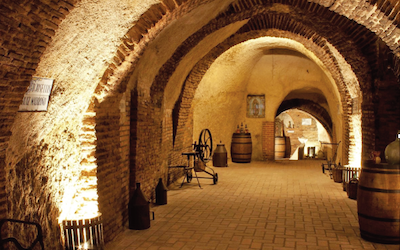
The estate itself adds another layer to the story. Bodegas Mocén is not just a winery but an architectural statement — underground galleries carved into the earth, extending over several kilometres, where temperature and humidity remain naturally stable year-round. These historic cellars are more than aesthetic: they are part of a continuity between traditional storage and modern production, reinforcing a sense that even “international” varieties here are grounded in something older.
In the glass, the wine shows a pale straw-yellow colour with greenish reflections, bright and clean, suggesting youth and freshness. The nose opens with classic varietal clarity: citrus peel, grapefruit, green apple, and a touch of tropical fruit — passionfruit and pineapple without being overwhelming. There is none of the overt exuberance sometimes found in warmer-climate Sauvignon Blanc. Instead, a more restrained aromatic profile emerges, with subtle herbal notes (cut grass, fresh herbs) and a faint mineral edge that anchors the fruit. On the palate, the wine is direct and well-defined. The entry is fresh, driven by crisp acidity that gives immediate lift. The mid-palate remains clean and linear (citrus, green fruit, a touch of tropical softness) without excess weight or sweetness. Compared to Verdejo-based wines of the region, this is more precise, less textural, more about line than volume. There is a slight saline and mineral nuance on the finish, reflecting the poor, stony soils of the plateau. The persistence is moderate but clean, with a refreshing dryness that invites another sip. It is not a wine that seeks complexity or depth; rather, it succeeds through balance, clarity, and drinkability. This is where its value lies.
Serve well chilled at 8–10 °C and pair it with light, clean flavours: grilled white fish, ceviche, seafood salads, or fresh goat’s cheese. It also works well with herb-driven dishes: asparagus, green salads, or Mediterranean vegetable plates, where its acidity and aromatic lift can cut through and refresh.
At its price point, it delivers exactly what it promises: a clear, well-made Sauvignon Blanc with a subtle imprint of Rueda’s continental character.
88–90 Bruja points. 6.95EUR from https://dicomar.com/