
Bodegas Las Erres · Fuenmayor · DOCa Rioja · 80% Tempranillo, 20% Graciano
The Bruja made a trip to La Rioja in search of new wine ideas from smaller producers, away from the big label that have made Rioja one of the world’s most recognisable wine regions.
Today, the DOCa contains over 500 wineries, from internationally recognised houses producing millions of bottles to family operations whose wines rarely travel far beyond the region. In 2025, Rioja sold approximately 313 million bottles, 80% of which was marketed by 40 bodegas. This figure captures the question behind the journey: what are the hundreds of other bodegas making, and what does Rioja taste like beyond its famous names.
One answer came from Fuenmayor, in Rioja Alta: Fila Rubea Edición Limitada, a wine produced in a small, individually numbered series, with a production of just 2,800 individually numbered bottles. Here, scale is part of the attraction, but the more interesting question is what the family chooses to do with that limited production.
Rioja is a land of Tempranillo, long ageing and oak barrels. Its traditional reds are built around ripe red fruit, vanilla, toast, spice and the gradual softening of tannins through time in wood and bottle. Crianza, Reserva and Gran Reserva became almost a language of their own, defining wines as much by how long they were aged as by where the grapes grew. The style made Rioja famous, but also gave many of its wines a recognisable family resemblance.
Bodegas Las Erres is a family project led by father and son Ramón and Ramón, established in 1991. The name, Las Erres, makes rather good sense once you connect the two Ramones behind it. The winery occupies a restored, century-old underground cellar, or calado, in Fuenmayor. The family brings a background in Rioja gastronomy to wine-making, and Fila Rubea is conceived as its flagship: a selection from its oldest vineyards.
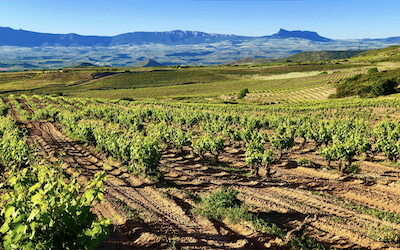
Fuenmayor lies about 12 kilometres north-west of Logroño, close to the Ebro, at an altitude of approx. 430 metres. This is deep wine country, with some 1,600 hectares under vine and 27 bodegas recorded by the Consejo Regulador. It is also a place where large commercial bodegas and small family producers share the same landscape. The vineyards spread across gently rolling land and river terraces, with the Sierra de Cantabria rising to the north and sheltering the Ebro valley from the full force of Atlantic weather.
The climate is one of Rioja Alta’s defining advantages. Atlantic influence brings relative coolness and helps preserve acidity, while the sheltered valley allows grapes to ripen through warm, relatively dry summers. The soils are varied: clay-limestone, iron-rich clay and alluvial deposits across the terraces. The result is a landscape capable of producing both the structured, age-worthy wines for which Rioja became famous and fresher, more fruit-driven expressions.
Fila Rubea brings together 80% Tempranillo and 20% Graciano, a particularly interesting proportion. Tempranillo supplies the body of the wine: ripe cherry and plum, supple fruit and the tannic structure that responds so well to oak ageing. Graciano, often used in much smaller quantities in traditional Rioja blends. With its naturally high acidity, deep colour and aromas, it adds freshness, spice and firmer tannins, giving the wine a more energetic structure and greater ageing potential.
The wine undergoes the malolactic fermentation in oak barrels, followed by seven months in new oak and a further seven months in bottle. So it exceed the time needed for a Crianza, but does not get to being a Reserva. Oak aging contributes pronounced toast, vanilla, spice and softer tannin, particularly over the relatively short period of barrel ageing employed here. This is a different approach from the prolonged maturation traditionally associated with Rioja Reserva and Gran Reserva: a shorter, more assertive encounter with oak, followed by bottle ageing, intended to retain fruit while developing structure.
In the glass, Fila Rubea is deep garnet-red, intensely and full-bodied. The nose opens with ripe red fruit, particularly plum and cherry, notes of darker fruit like blackberry, and spice from the substantial Graciano component. The oak brings a softer, toasted register, with gentle vanilla and woody spice. An interesting contrast between the freshness of the fruit and the richer, more velvety character from the oak.
On the palate, the wine is round intense and fruit-driven, with a smooth entry and a persistent finish. Tempranillo gives it breadth, while Graciano’s acidity keeps that richness in balance. The oak aging adds weight and texture, without masking the fruit dominance. Fila Rubea is an intense, modern expression of Rioja, built around ripe fruit, while respecting unmistakable influence of barrel ageing.
Open an hour before serving at 16–18°C, with chuletillas al sarmiento (lamb chops grilled over vine cuttings), patatas a la riojana (potatoes with chorizo and paprika), braised beef cheeks, roast lamb, game or mature sheep’s cheese. We had it on its own and it was delicious.
90 Bruja points, 10 EUR from Bodegas Las Erres C/ San Cristóbal, 68, 26360 Fuenmayor, La Rioja Phone: 941 45 01 05
(Feature/Wine: Las Tres Erres, Rioja, Wineries, Fuenmayor, Fila Rubea Edición Limitada, Tempranillo, Graciano, Ramón And Ramón
news, andalucia, granada, las tres erres, rioja, wineries, fuenmayor, fila rubea edición limitada, tempranillo, graciano, ramón and ramón