
It’s been a long time that we’ve pointed out that the Peseta lives on in a disguised form but here is how this second-life exists within the National Lottery.

It’s been a long time that we’ve pointed out that the Peseta lives on in a disguised form but here is how this second-life exists within the National Lottery.
The Museo de Historia de Motril will be running an exhibition all about CB (Citizen Band) radio from now until the 23rd of March.
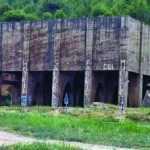
On the 17th of May, 1927 the cable-way system linking Dúrcal to Motril was inaugurated – yes, 90 years ago there was an aerial system suspended from huge pylons bringing mineral trucks all the way down to Motril port.
Almuñécar is finishing off the preparations for the III Jornadas de Arqueología e Historia de la Costa Tropical on the 8th, 9th & 10th of November.
At Los Nordicos last week we had the privilege to listen to an interesting lecture by historian Bengt Kummel, PhD, from Finland. The topic was “The dramatic circumstances around the transfer of Estonian Swedes to Sweden in 1944”. Dr. Kummel started by giving some historic data on the Swedish population of Estonia, a linguistic minority residing in the coastal areas and islands of what today is western and northern Estonia.
The Salobreña Castle is about to bring out an audio-guide for its visitors in four languages. The audio-guide contains local history and interesting anecdotes.
In Franco’s last years there was a joke kicking around about why the Guardia Civil always walked around in pairs. The question was asked and the response was: one who can read and write and the other to keep an eye on the dangerous intellectual. Things have come a long way since then
When living in Nerja some 10 years back, we used to play golf at the Añoreta course near Rincón de la Victoria. At a signpost I often noticed the name of Macharaviaya. I used to think: What a funny name for a place.
Did you know that Motril declared itself an independent republic in the1870’s? It probably had a population at the time of three people and two thirds of a goat, but there you go.
Dogs were first domesticated from wolves at least 17,000 years ago, but perhaps as early as 150,000 years ago based upon genetic fossil and DNA evidence.